

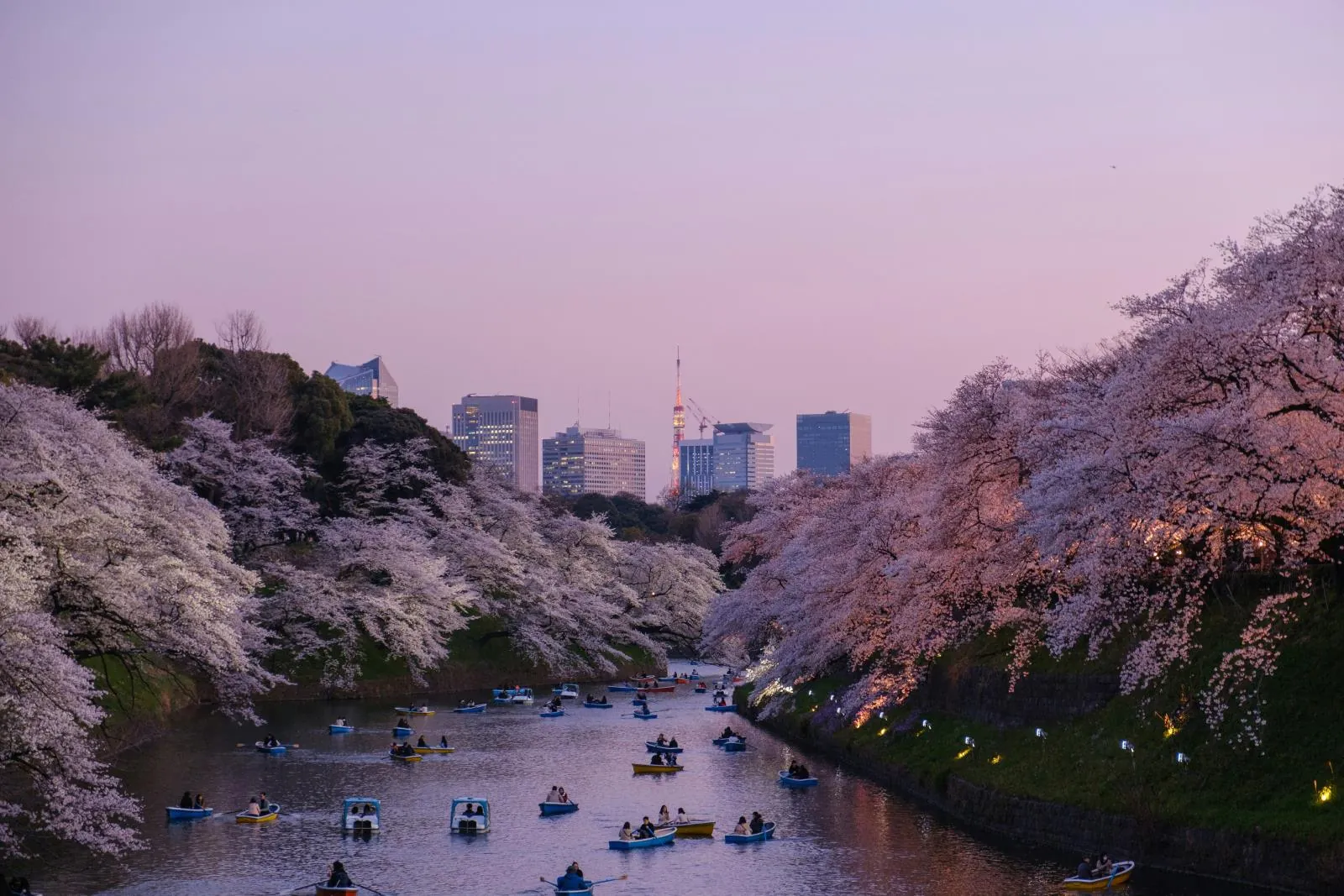
Japan has something for every traveller: futuristic megacities, centuries-old temples, extreme natural landscapes and unrivalled cuisine. This guide goes through the essential places city by city, with what to see, how much time you need and how to fit them into your route.
What to see in Tokyo
Tokyo is the largest city in the world and one of the most stimulating. Its neighbourhoods are different worlds: you can go from a 17th-century temple to a futuristic skyscraper in a ten-minute walk.
| Place | Neighbourhood | Recommended time | Type |
|---|---|---|---|
| Senso-ji Temple | Asakusa | 1–2 h | Oldest Buddhist temple in Tokyo |
| Shibuya Crossing | Shibuya | 30 min | The busiest crossing in the world |
| Shinjuku (at night) | Shinjuku | 2–3 h | Neon, Kabukicho, Golden Gai |
| Meiji-jingu | Harajuku | 1 h | Great Shinto shrine in an urban forest |
| Akihabara | Akihabara | 1–2 h | Electronics, anime and otaku culture |
| Roppongi Hills / Mori Art Museum | Roppongi | 2–3 h | Contemporary art, 360° viewpoint |
| Ueno (museums + park) | Ueno | 2–4 h | National Museum, zoo, historic park |
| TeamLab Planets / Borderless | Toyosu / Azabudai | 2–3 h | Immersive digital art |
| Shinjuku Gyoen Garden | Shinjuku | 1–2 h | Imperial garden: Japanese, French, English |
| Tsukiji Market (outer) | Tsukiji | 1 h | Sushi and fresh seafood breakfast |
Recommended days in Tokyo: a minimum of 3 nights for the first visit; 5 nights if you want Nikko or Kamakura as a day trip.
What to see in Kyoto
Kyoto was the imperial capital of Japan for more than a thousand years. It preserves more than 1,600 Buddhist temples and 400 Shinto shrines, as well as the most authentic geisha districts in the country.
| Place | Area | Recommended time | Type |
|---|---|---|---|
| Fushimi Inari-taisha | South Kyoto | 2–4 h | Thousands of orange torii up the mountain |
| Arashiyama (bamboo + Tenryu-ji) | West | 3–4 h | Bamboo grove, zen temple with garden |
| Gion (Hanamikoji) | Centre-east | 1–2 h (afternoon/evening) | Historic geisha district |
| Kinkaku-ji (Golden Pavilion) | Northwest | 1 h | Zen temple with a gold exterior over a lake |
| Higashiyama (Kiyomizu-dera) | East | 2–3 h | Temple with a wooden platform over the valley |
| Nijo-jo | Centre | 1–2 h | Shogunal castle with "nightingale" floors |
| Philosopher's Path (Tetsugaku-no-michi) | East | 1 h | Pedestrian canal with 450 cherry trees |
| Ginkaku-ji (Silver Pavilion) | East | 1 h | Zen temple with an impeccable sand garden |
Recommended days in Kyoto: a minimum of 2 nights; 3–4 if you want to include Nara or Osaka as a combined base.
To get the most out of two of its icons, we have our own guides to Fushimi Inari and to the geishas of Gion.
What to see in Osaka
Osaka is the most fun city in Japan: loud, direct and obsessed with food. The osaka-jin are famous for spending their last yen on eating well.
| Place | Area | Recommended time | Type |
|---|---|---|---|
| Dotonbori | Namba | 1–2 h (evening) | Canal with neon and street food |
| Osaka Castle | Centre | 2 h | 16th-century castle with an interior museum |
| Shinsekai + Tsutenkaku | South | 1–2 h | Retro 1950s district, historic tower |
| Kuromon Ichiba (market) | Namba | 1 h | Covered market with seafood and takoyaki |
| Umeda Sky Building | Umeda | 1 h | Aerial viewpoint between two linked skyscrapers |
| Kaiyukan Aquarium | Tempozan | 2–3 h | One of the best aquariums in the world |
Recommended days in Osaka: 1–2 nights if you combine it with Kyoto; 3 nights if you use Osaka as a base for Hiroshima, Kobe and Nara.
Hiroshima and Miyajima
Hiroshima is a city completely rebuilt after 1945, with a solemn memorial and a vital energy that surprises every visitor. 30 minutes away by ferry, the island of Miyajima is one of the most photographed landscapes in Japan.
- Peace Memorial Park and Museum — the epicentre of the bomb turned into a park; the museum is one of the most powerful in the world. Set aside at least 2–3 hours.
- Atomic Bomb Dome (Genbaku Dome) — the only building that survived near the epicentre, preserved as a ruin and a UNESCO World Heritage Site.
- Miyajima: floating torii of Itsukushima — the orange torii over the sea that appears in all the photos of Japan. At high tide it seems to float; at low tide you can walk up to it.
- Mount Misen (Miyajima) — go up by cable car or on foot (90 min) for views of the Seto Inland Sea. Free-roaming deer all over the island.
- Hiroshima okonomiyaki — the local version has layers of soba noodles and cabbage; it is completely different from Osaka okonomiyaki. Eat at Okonomi-mura (a three-storey building dedicated to the dish).
Recommended days: 1 night in Hiroshima with a visit to Miyajima, or as a day trip from Osaka (around 1h 30 min on the Shinkansen; a little less on the Nozomi, which the JR Pass does not cover).
Nara, Hakone and other getaways
Nara (day trip from Kyoto or Osaka)
45 minutes by train from Kyoto, Nara was the first permanent capital of Japan. Its historic park concentrates all the essentials within a 1 km radius.
- Nara deer — more than 1,200 free-roaming deer wander among the visitors and the temples. You can buy rice crackers (shika senbei) to feed them.
- Todai-ji — a Buddhist temple housing one of the largest bronze Buddhas in the world (about 15 m tall, the largest in Japan). The wooden building containing it was for centuries one of the largest on the planet.
- Kasuga-taisha — a Shinto shrine with thousands of stone and bronze lanterns lit twice a year.
Hakone (getaway from Tokyo)
85 minutes by Romancecar from Shinjuku, Hakone offers the best views of Mount Fuji from the Tokyo region.
- Lake Ashi with views of Fuji — on clear days the reflection of Fuji in the lake is one of the most iconic landscapes in Japan. The pirate boat between Togendai and Moto-Hakone is part of the classic route.
- Owakudani Ropeway — cable car over an active geothermal field with sulphur smoke and eggs cooked in volcanic water (kuro tamago).
- Hakone Open-Air Museum — sculpture garden with Picasso, Rodin and Miro in an exceptional mountain setting.
- Onsen in a ryokan — Hakone has more than 20 hot springs; the Fuji water feeds many of them. It is the most accessible onsen destination from Tokyo.
Other essential visits
| Destination | From | Travel time | Why go |
|---|---|---|---|
| Nikko | Tokyo | 2 h by train | Complex of shogun mausoleums in a centuries-old forest; Tosho-gu (UNESCO) |
| Kamakura | Tokyo | 1 h by train | 13 m Great Buddha in the open air, zen temples, surfing in Enoshima |
| Kanazawa | Tokyo / Osaka | 2.5 h on the Shinkansen | Kenroku-en (one of the 3 best gardens), samurai and geisha district |
| Takayama | Nagoya | ~2h 20 min by train (Hida) | Preserved Edo-era mountain town; sake and miso markets |
| Fukuoka | Osaka | 2.5 h on the Shinkansen | Yatai (street stalls), hakata ramen, gateway to Kyushu |
Unique experiences you will not find anywhere else
- Sleep in a ryokan with an onsen — a night in a traditional Japanese inn with a kaiseki dinner (several courses), a hot-spring bath and tatami. The most immersive experience of Japanese culture. Price: 15,000–40,000 ¥ per person with dinner included.
- Tea ceremony (chado) — many temples in Kyoto offer 30–45 minute ceremonies open to tourists for 1,000–2,000 ¥. Urasenke and Omotesenke in Kyoto are the most important lineages.
- Early morning at Toyosu market — the largest tuna auction in Japan, around 5:30–6:00 a.m. The upper platform (the closest) is allocated online weeks in advance via the market website; the free-viewing terraces require no reservation (arrive early). Free admission.
- The Kumano Kodo route — pilgrimage trail (UNESCO) on the Kii Peninsula connecting mountain shrines; the Japanese alternative to the Camino de Santiago. It can be combined among pilgrims.
- Live sumo — tournaments in Tokyo (January, May, September), Osaka (March), Nagoya (July) and Fukuoka (November). Tickets from 2,200 ¥ (upper stand) to 15,000+ ¥ (ringside).
- Sapporo snow festival — every February in Hokkaido: monumental ice sculptures and winter festivities, one more date on the calendar of Japan's festivals. Japan's northernmost island also has the best powder snow in Asia for skiing.
- Konbini at 3 a.m. — the 7-Eleven, Lawson and FamilyMart shops are open 24 hours and sell onigiri, hot ramen, sake and travel items. A microcosm of Japanese society at any hour.
Nature and landscapes: the other Japan
Outside the cities, Japan holds some of the most varied landscapes in Asia: active volcanoes, subtropical beaches, alpine mountains and ancient forests. If you are a repeat traveller or have three weeks, these natural destinations deserve a place in the route.
- Mount Fuji (Fujisan) — the sacred 3,776 m volcano, symbol of the country and the highest mountain in Japan. It is seen from Tokyo on clear days, but the best views are in the Five Lakes area (Fujikawaguchiko) and in Hakone. The official climbing season is from July to early September; the rest of the year the summit is covered in snow and the trails closed. How to see it or climb it in a day from the capital, in the guide to Mount Fuji from Tokyo.
- Japanese Alps (Kamikochi, Nagano) — high mountain valley with turquoise rivers and 3,000 m peaks, accessible only from mid-April to mid-November. An ideal base for medium-difficulty hiking in an almost alpine setting.
- Hokkaido — the northernmost island, with national parks (Daisetsuzan, Shiretoko), lavender fields in Furano (July) and the best powder snow in Asia for skiing (Niseko, December-March). Wild nature, brown bears and outdoor hot springs.
- Okinawa and the southern islands — a subtropical Japan of white-sand beaches, coral reefs and its own Ryukyu culture. Best from May to October, avoiding the September typhoon peak. 2.5 h by flight from Tokyo.
- Yakushima — a World Heritage island with ancient cedars (the Jomon Sugi is between 2,000 and 7,000 years old) and moss forests that inspired Princess Mononoke. It is one of the rainiest places in Japan: bring waterproof gear.
- Kumano Kodo (Kii Peninsula) — a UNESCO World Heritage network of pilgrimage trails crossing mountains between Shinto shrines. The Japanese alternative to the Camino de Santiago, with stages on foot and nights in rural accommodation.
To see the momiji (red autumn leaves) or the sakura in natural settings, check when each phenomenon happens by region in the guide to when to travel to Japan.


