

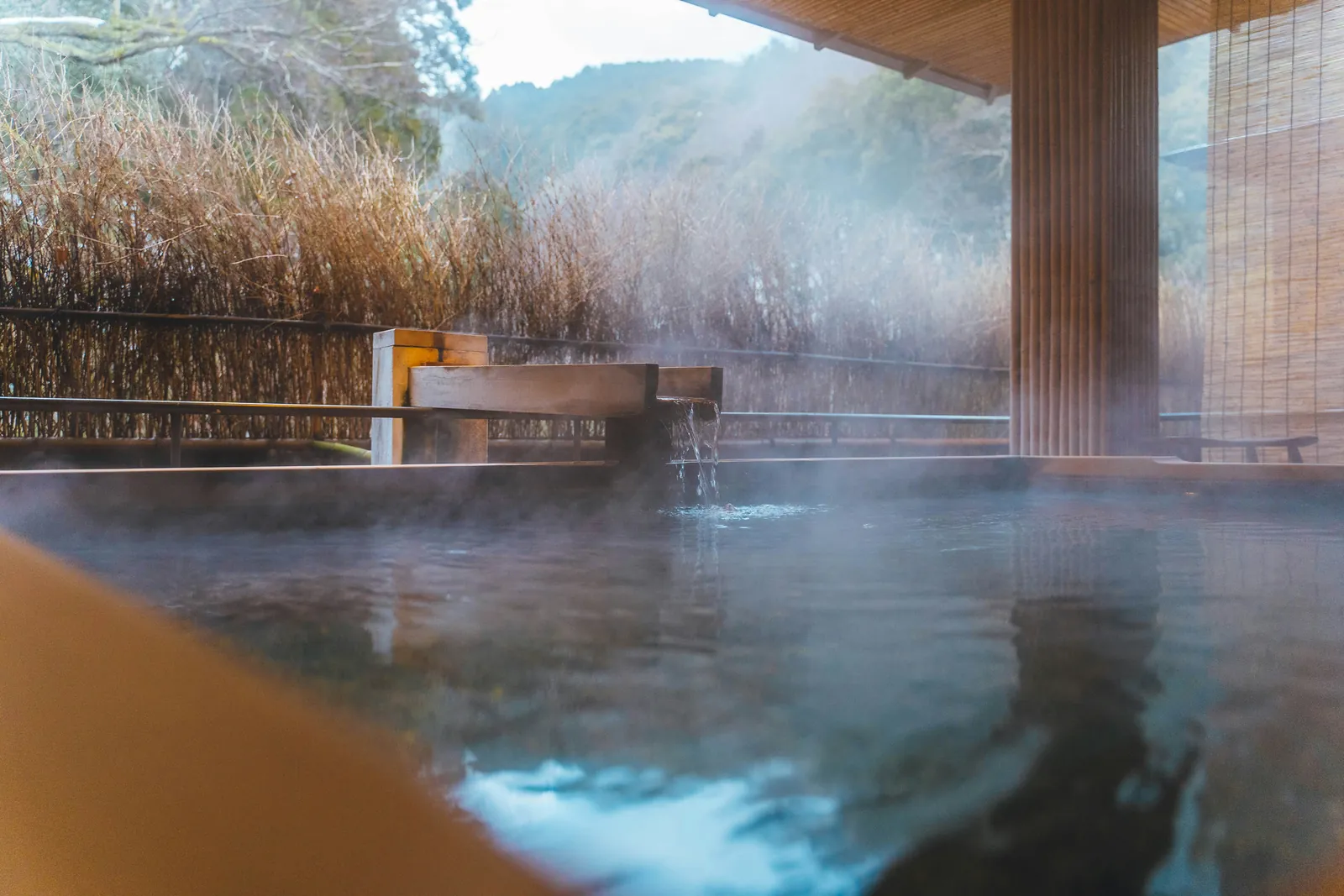
Bathing in an onsen — a natural hot-spring bath — is one of the most authentic experiences Japan offers, a country sitting on thousands of hot springs. But it comes with its rules: you undress, wash thoroughly before entering and keep quiet. This guide explains exactly what an onsen is and how it differs from a sento, the etiquette step by step so you do not slip up, what to do if you have tattoos and which are the most famous hot-spring towns in the country.
What an onsen is (and how it differs from a sento)
An onsen is a bath that uses natural thermal water: geothermal water, hot and rich in minerals, that springs from Japan's volcanic subsoil. It is not a tourist gimmick, but a deep part of the country's culture: Japan sits on volcanic terrain that feeds more than 25,000 hot springs from Hokkaido to Kyushu, and bathing in them is a centuries-old tradition reputed to be relaxing and good for the skin.
It should not be confused with a sento. The sento is the neighbourhood public bath: it uses heated tap water, not natural thermal water. For a bath to be legally called an onsen, Japanese law requires the water to spring from the ground at 25 °C or more at its source, or to contain at least one of the recognised minerals (sulphur, iron, sodium and the like) at a certain concentration. The sento does not meet that requirement, and tends to be a more urban, everyday place. The etiquette for using them, however, is practically the same.
Onsen etiquette, step by step
Onsen culture is based on keeping the water spotless for everyone. The rules are not whims: they have a logic of hygiene and shared respect. Once you internalise them, they are simple. This is the usual ritual:
- Nudity required. You enter the onsen completely naked. Swimsuits and underwear are not allowed. The baths are separated by sex (except mixed ones, see below), so nudity is the norm for everyone and no one pays it any attention.
- Leave your clothes in the changing room. Before the bathing area there is a changing room with lockers or baskets where you leave all your clothes and the large towel. You only enter with the small towel.
- Shower and wash BEFORE entering. Next to the pool there is a row of showers with a stool. You have to wash your body thoroughly — with soap — and rinse well before getting into the thermal water. The onsen is not for getting clean, but for relaxing in already-clean water.
- The small towel does not touch the water. The towel you enter with is to cover yourself on the way to the bath and to dry off; it must never go into the water. The usual thing is to leave it to one side of the pool or, as many Japanese do, folded on top of your head.
- Tie up your hair. If you have long hair, tie it up so it does not touch the water. Even freshly washed hair is considered a possible contaminant of the shared water.
- No swimming, splashing or noise. The onsen is a space of calm. You do not swim, do not dive, do not splash and speak quietly. You also do not eat or drink in the water, and alcohol is especially discouraged.
- No photos. Out of respect for others' privacy, no photographs are taken in the bathing area, not even with a phone.
- Leave calmly and dry off before the changing room. It is best not to stay more than 10-15 minutes at a time in very hot water. On leaving, dry off with the small towel before returning to the changing room so as not to flood it.
Mixed baths (konyoku) and private baths
Although the norm is separation by sex, there are konyoku, mixed baths where men and women share the same pool. They are increasingly rare and tend to be in rural or mountain areas, frequently outdoors. In some you are allowed or asked to enter with a bath towel or a specific garment; in others there are slots reserved for women only.
The other option, very practical for couples, families travelling with kids or those who prefer privacy, is the reservable private bath (kashikiri): you rent an entire onsen for yourself for a time, usually by the hour and with a small additional cost. It is also the most convenient solution for those who have tattoos or do not feel comfortable with group nudity. Many ryokan with onsen offer this service.
Onsen and tattoos: what you need to know
Many onsen do not allow tattoos because of their historical association with the yakuza, although more and more establishments accept them. If you have one, there are alternatives: patches to cover small ones, private baths (kashikiri) and baths that openly admit them. We explain them in the guide to onsen with tattoos.
Types of onsen: rotenburo, ryokan and hot-spring towns
Not all onsen are the same. These are the most common ways to enjoy them, and it is worth combining several on a trip:
- Rotenburo (open-air bath). It is the most coveted: the thermal pool is outdoors, surrounded by nature. Bathing with views of a forest, a river or, in winter, while it snows (yukimi) is one of the great images of Japan.
- Ryokan with onsen. A ryokan is a traditional Japanese inn; many have their own onsen. Staying at one lets you bathe in the afternoon and at dawn, sleep on tatami and enjoy a kaiseki dinner. It is the fullest way to live the experience.
- Hot-spring towns (onsen town). Entire towns built around the springs, where you stroll from bath to bath in yukata. They have a charming night-time atmosphere, with steam rising from the streets.
Where to go: famous hot-spring towns in Japan
There are thermal areas all over the country, but some are real institutions. These are among the most recognised and verified, spread across the different regions of Japan:
| Destination | Region | Why it stands out |
|---|---|---|
| Hakone | Near Tokyo | The most accessible onsen from Tokyo (~90 min), with views of Mount Fuji and a great variety of baths and ryokan. |
| Kusatsu | Gunma | One of the most prestigious in the country, with very acidic waters. It regularly tops the ranking of onsen in Japan. |
| Kinosaki | Hyogo | A picture-postcard hot-spring town: you stroll in yukata between its seven public bathhouses (sotoyu). |
| Beppu | Oita (Kyushu) | The largest volume of thermal water in Japan, with nearly 3,000 springs and the famous coloured "hells" (jigoku). |
| Gero | Gifu | Considered one of the three great onsen of Japan, with soft alkaline water and more than a thousand years of history. |
| Noboribetsu | Hokkaido | The most representative onsen of Hokkaido, with its striking Jigokudani (hell valley) volcanic valley. |
Hakone and Kinosaki are the easiest to fit into a classic route through Honshu — for example, on a 14-day itinerary through Japan — while Beppu and Noboribetsu require a detour to Kyushu and Hokkaido respectively, but reward the traveller who seeks onsen as the focus of the trip. If you want to see macaques bathing in hot springs, the Nagano area (Jigokudani Monkey Park) is the reference.
How much it costs to enter an onsen
For a day visit (without staying), entry to a typical public bath usually costs between 500 and 1,000 ¥ (around 3-5 €), although the general range goes from just a few hundred yen at simple baths to about 2,000 ¥ at large complexes or luxury ryokan open to day visitors. The humblest neighbourhood onsen can cost even less, and payment is almost always in cash: bring some spare yen, as explained in the guide to money in Japan.
Bear in mind two common extras: the towel rental (around 200-300 ¥) if you do not bring your own, and sometimes a supplement for the sauna or additional areas. If you stay at a ryokan with onsen, the bath is usually included in the room price, as are the towels and the yukata. To get an idea of how all this fits into the cost of the trip, see the guide on how much it costs to travel to Japan.
Practical tips for your first time
- Remove your make-up and contact lenses before entering, and tie up your hair if it is long.
- Stay hydrated. Hot water dehydrates: drink water before and after, and step out to cool down if you feel dizzy.
- You do not need to bring anything. Ryokan and many complexes provide towels, yukata and amenities; check what yours includes in the what to bring to Japan guide.
- Arrive clean and calm. Avoid the onsen right after eating a lot or drinking alcohol.
- Respect the silence. It is a shared space of rest; a low tone of voice is part of the experience.
The onsen also has its own etiquette within Japanese customs: as in almost all of Japan, respect for the shared space rules. And as happens at restaurants and ryokan, you do not tip: the service is already included.

