

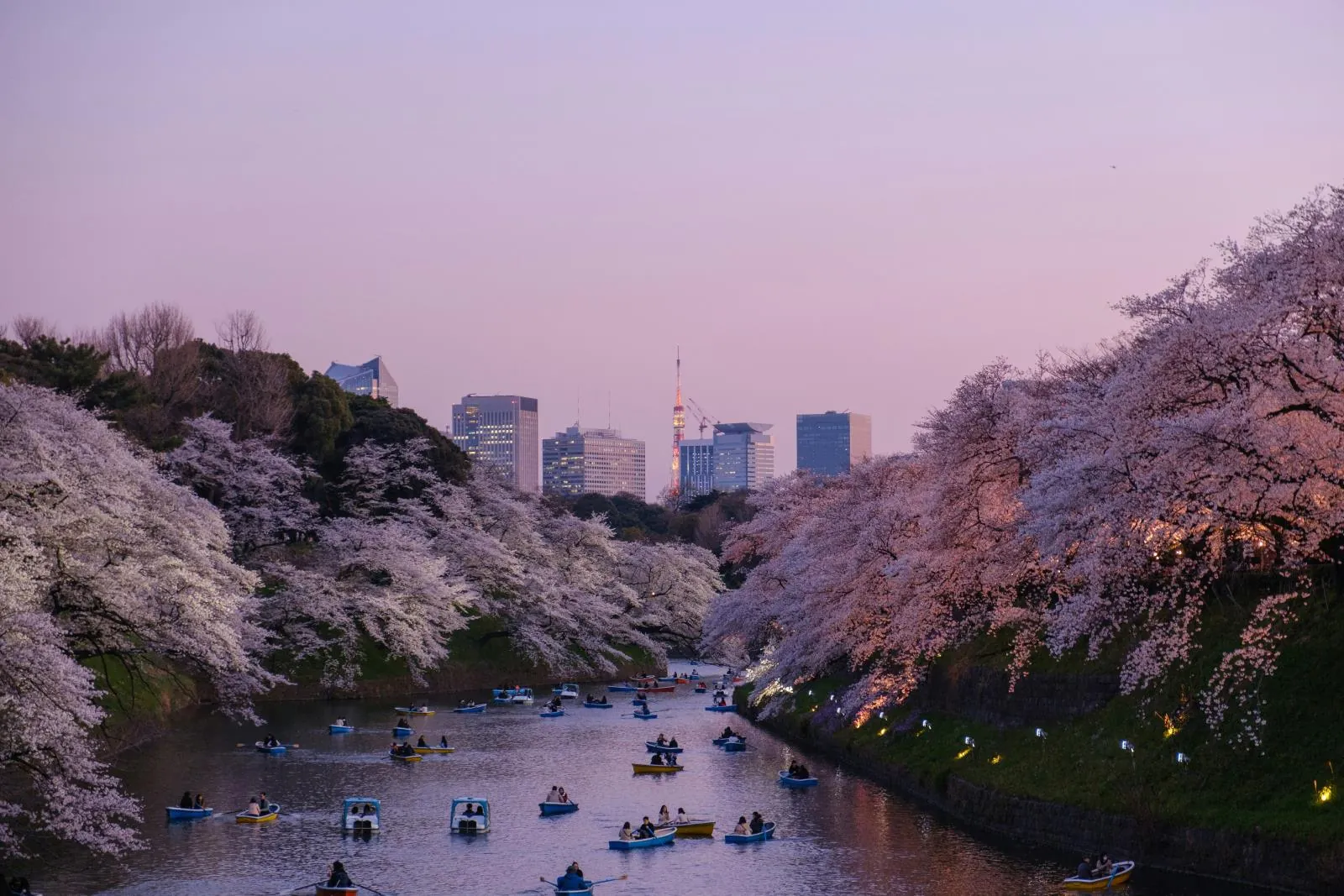
Japan has hundreds of cities worth visiting, but most travellers have between ten days and three weeks. This guide helps you decide which cities to fit into your route, how many days to spend in each and what to expect in terms of budget.
Quick comparison of the main cities
This table summarises the must-see cities with the key data to plan your route at a glance.
| City | Recommended days | Ideal for | Avg. hotel/night (2 pax) | From Tokyo |
|---|---|---|---|---|
| Tokyo | 4 – 6 | First visit, pop culture, food | 80 – 150 € | — |
| Kyoto | 3 – 5 | Temples, Gion, geishas, zen gardens | 90 – 160 € | 2 h 15 min (Shinkansen) |
| Osaka | 2 – 3 | Street food, nightlife | 70 – 120 € | 2 h 30 min |
| Nara | 1 (day trip) | Deer, the Great Buddha, medieval temples | 60 – 100 € | 3 h (via Kyoto) |
| Hiroshima | 1 – 2 | Peace, history, Miyajima | 70 – 110 € | 3 h 50 min (direct Shinkansen) |
| Hakone | 1 – 2 | Mount Fuji, onsen, ryokan | 120 – 250 € (ryokan) | 1 h 30 min (Romancecar) |
| Kamakura | 1 (day trip) | Open-air Great Buddha, zen temples | 70 – 120 € | 1 h (train) |
| Kanazawa | 2 | Historic districts, Kenroku-en garden | 70 – 130 € | 2 h 30 min (Hokuriku Shinkansen) |
| Takayama | 2 | Wooden old town, Japanese Alps | 70 – 130 € | 4 h 30 min (via Nagoya) |
| Kobe | 1 – 2 | Wagyu beef, port, Mount Rokko | 70 – 120 € | 2 h 45 min (Shinkansen) |
| Fukuoka | 2 | Ramen, yatai, gateway to Kyushu | 60 – 100 € | 5 h (Shinkansen) |
| Nikko | 1 (day trip) | Lacquered shrines, mountain nature | 80 – 150 € | 2 h (direct train) |
Why to spend time in each city
Japan is one of the few countries where you can travel by high-speed train between completely different cities in under two hours. That creates the temptation to try to see too much in too little time. The most common mistake a first-time traveller makes is to cram the schedule, believing that seeing more is the same as experiencing more.
The reality is that each Japanese city has its own character. Tokyo is chaotic and immersive. Kyoto is unhurried and ceremonial. Osaka is direct and loud in the best sense. Spending only a day in each does none of them justice.
The Shinkansen network connects the major hubs in very competitive times: Tokyo to Kyoto in 2h 15 min, Kyoto to Osaka in 15 min, Osaka to Hiroshima in approximately 1h 20 min. That makes getting around much easier, but it does not mean you should hop from city to city every day. This guide is designed to help you prioritise and build an itinerary through Japan you will genuinely enjoy.
Tokyo: the best point of entry
Tokyo is not a city, it is a collection of cities within one metropolis. With nearly 14 million inhabitants in the metropolis alone (and some 37 million across the whole metropolitan area, the largest in the world), the neighbourhoods are so different from one another that you can spend a week without repeating an area and still keep discovering new things.
How many days: between 4 and 6 days is the reasonable minimum for a first visit. With 4 you can cover the essential neighbourhoods; with 6 you have room to go slower or to take a day trip such as Kamakura or Nikko.
Where to stay: Shibuya, Shinjuku and Asakusa are the most practical areas (see the detail on each in our guide to where to stay in Tokyo). All three have excellent metro connections and accommodation for every budget. If you prioritise the convenience of getting around Tokyo by train, the Tokyo Station area is also very valid.
What to see: the Shibuya crossing, the Asakusa district with Senso-ji temple, the Tsukiji market, the view from the Tokyo Skytree, the Akihabara district for pop culture and electronics, and the quiet streets of Yanaka if you want to escape the noise for a few hours.
Indicative budget: a mid-range hotel in Shinjuku from 80-120 € a night for two people. Eating well is cheap if you use izakayas and ramen shops: between 10 and 20 € per person and meal.
Kyoto and Nara: the cultural heart of Japan
If Tokyo represents modern Japan, Kyoto embodies the Japan you imagined before arriving. With more than 1,600 temples and shrines, the former imperial capital holds a cultural density with no equivalent in any other city in the country.
How many days in Kyoto: at least 3 days (see the detail in our guide to how many days to spend in Kyoto). With 4 or 5 you have time to visit the Arashiyama bamboo grove at a relaxed pace, walk the Philosopher's Path and explore the Gion district at dusk. The Fushimi Inari shrine — the thousands of orange torii gates —, the golden Kinkaku-ji pavilion and the Ryoan-ji temple with its rock garden are essential.
Nara is only 45 minutes from Kyoto by train and is a half-day or full-day trip worth every minute. Hundreds of deer roam freely through the park surrounding Todai-ji, whose Great Buddha hall is one of the largest wooden buildings in the world. If you have time, stay overnight: the city empties out at night and the experience is completely different.
Indicative budget: a hotel in central Kyoto from 90-140 € a night for two people. Most temples have free entry; those that charge are around 500-800 yen (3-5 €).
Osaka and Hiroshima: food and history
Osaka has a reputation as the most open and direct city in Japan. The street food of Dotonbori — takoyaki, okonomiyaki, kushikatsu — is reason enough to spend at least two nights here. Osaka Castle is worth half a morning. The Namba district and the Dotonbori corridor are essential at night.
How many days in Osaka: 2 to 3 days. The city has fewer historical attractions than Kyoto, but what it lacks in temples it makes up for in atmosphere, markets and restaurants.
Hiroshima is just over an hour by Shinkansen from Osaka (about 1h 20 min on the Nozomi and Mizuho services). The Peace Memorial Park and the Atomic Bomb Museum are an experience that changes the perspective of the trip. Set aside at least a full afternoon, and if possible the whole day. The trip to Miyajima, the shrine island 30 minutes away by ferry, offers one of the most photogenic moments in Japan: the floating torii of the Itsukushima shrine at high tide.
Indicative budget in Osaka: a hotel in Namba or Shinsaibashi from 70-110 € a night for two people. Eating in Dotonbori costs between 8 and 15 € per person.
Kanazawa, Hakone and Kamakura
If you have more than two weeks, these three cities add dimensions to the trip that the classic Tokyo-Kyoto-Osaka route does not cover.
Kanazawa (2h 30 min from Tokyo by Shinkansen) is the city that has grown most in popularity in recent years. Its historic centre preserves whole districts of samurai and geisha houses, and the Kenroku-en garden is considered one of the three best gardens in Japan. Perfect for travellers who want to escape the crowds of Kyoto.
Hakone (1h from Tokyo) is the natural showcase of Mount Fuji. The views of the snow-capped volcano from Lake Ashi are among the most iconic in the country. Hakone is also the best place to get started with onsen (hot spring) culture and ryokan (traditional inns) without straying too far from the capital.
Kamakura (1h from Tokyo) has the most famous open-air Great Buddha in Japan, a dozen zen temples in excellent condition and very easy access by train. It works well as a day trip from Tokyo or as a night to take things more slowly.
Takayama and Kobe: traditional mountains and good food
Two stops that enrich a long route without straying too far from the central axis.
Takayama is in the Japanese Alps, about 4h 30 min from Tokyo combining the Shinkansen to Nagoya and the Limited Express Hida train. Its old town of Edo-era wooden houses, the morning markets by the river and its proximity to the village of Shirakawa-go (a World Heritage Site for its thatched-roof farmhouses) make it one of the most authentic experiences of rural Japan. With two nights you have room for the town and the trip to Shirakawa-go.
Kobe is a stone's throw from Osaka and Kyoto: barely 12-13 minutes by Shinkansen from Shin-Osaka, or a little over half an hour by local train. It is world-famous for its wagyu beef, but it also has a pleasant port, the historic Kitano district with its Western merchant houses and night views from Mount Rokko. It works very well as a day trip from Osaka or as a special dinner.
Fukuoka and Nikko: two extremes for repeat visitors
These two cities do not usually feature on a first trip, but they are the most interesting bets if you already know the Tokyo-Kyoto-Osaka axis and want to see a different side of the country.
Fukuoka is the largest city in Kyushu, the southern island, and the gateway to a region quieter and more rural than central Japan. It is about 5 hours by Shinkansen from Tokyo, so it only pays off if you have three weeks or arrive on a direct flight. It is famous for its tonkotsu ramen (pork-bone broth, originally from the Hakata area) and for the yatai, the street food stalls set up each night by the Naka river. With two nights you have time to eat well, see the Dazaifu Tenmangu shrine on the outskirts and use it as a base for trips around Kyushu.
Nikko is at the opposite extreme: just 2 hours north of Tokyo by direct train, it is one of the best day trips from the capital. Its ensemble of gold-lacquered shrines and temples — led by the Toshogu, mausoleum of the shogun Tokugawa Ieyasu — is a World Heritage Site. The mountain setting, with waterfalls and Lake Chuzenji, means the visit combines culture and nature in unusual proportions. In autumn (late October to mid-November) it is one of the most spectacular and accessible koyo spots from Tokyo.
How to fit them in: Nikko fits into any route as a day trip from Tokyo without altering the rest of the plan. Fukuoka, on the other hand, requires reorganising the logistics: the logical thing is to end the trip there and fly back from its airport, or to arrive directly if your international flight allows it.
How to organise your route
The most common route for a first trip of 14 days is as follows:
- Tokyo: 5 nights (includes a day trip to Kamakura or Nikko)
- Hakone: 1 night (onsen and Fuji views on the way south)
- Kyoto: 4 nights (includes a day trip to Nara)
- Osaka: 3 nights (includes a day trip to Hiroshima and Miyajima)
This route always moves in the same direction and the return flight leaves from Osaka (Kansai airport), which avoids the cost of going back to Tokyo. It is the most efficient option in time and money.
For a 21-day route, the most recommended variants are to add Hiroshima as its own stop (2 nights), to include Kanazawa on the way between Tokyo and Kyoto using the Hokuriku Shinkansen, or to extend Kyoto to 5-6 nights to explore the villages of Ohara and Kibune.
If you have fewer than 10 days, the most sensible thing is to focus only on Tokyo (3-4 nights) and the Kyoto-Osaka axis (4 nights), leaving the rest for a second visit. Trying to do too much in too little time is the mistake that generates the most regret.
A note on the JR Pass: the Japan Rail pass covers the Shinkansen on most legs of the classic route. For a 14-day route between Tokyo and Osaka, the pass usually pays off if you also travel to Hiroshima or Kanazawa. If you only do Tokyo-Kyoto-Osaka, compare the individual tickets: sometimes they are cheaper.