

Eating is one of the great pleasures of a trip to Japan, and Japanese cuisine goes far beyond sushi. This guide brings together the typical dishes you cannot miss, the specialities that change from one city to another and the types of restaurant where to try them, from a ramen stall with a ticket machine to a konbini tray. The good news: you eat incredibly well at every price range.
Japanese cuisine is much more than sushi
If you only associate Japan with sushi, a huge surprise awaits you. Traditional Japanese cuisine (washoku, inscribed by UNESCO as Intangible Cultural Heritage in 2013) is one of the most varied and refined in the world, and much of what is eaten daily has little to do with raw fish: there are steaming noodle soups, crispy fried foods, charcoal-grilled skewers, stews, savoury pancakes and a delicate confectionery of its own.
At the heart of washoku is the ichiju-sansai structure ("one soup, three dishes"): a bowl of rice, a miso soup and several side dishes that change with the season. It is the pattern of home cooking and of the set menus you will find all over the country.
Eating out is also cheap and easy compared with Europe: a bowl of ramen or a bowl of rice with something on top costs very affordable prices, and the average quality — even at a chain or a 24-hour store — is extremely high. This guide sorts out what to try, where to do it and how to manage without knowing Japanese.
Typical dishes you have to try
These are the great classics of Japanese cuisine, the ones worth seeking out at least once during the trip:
- Sushi and sashimi. Sushi combines vinegared rice with fish or other ingredients; sashimi is the raw fish alone, with no rice. From a cheap conveyor belt (kaiten-zushi) to a high-end counter, there is sushi for every budget.
- Ramen. The star dish of Japan for many travellers: noodles in an intense broth that varies by region (soy, miso, salt or pork bone). It is eaten quickly, in small places and at a good price.
- Udon and soba. The other two great noodles: udon is thick and soft, made of wheat; soba is thin and made of buckwheat. They are had in hot broth or fresh with a dipping sauce.
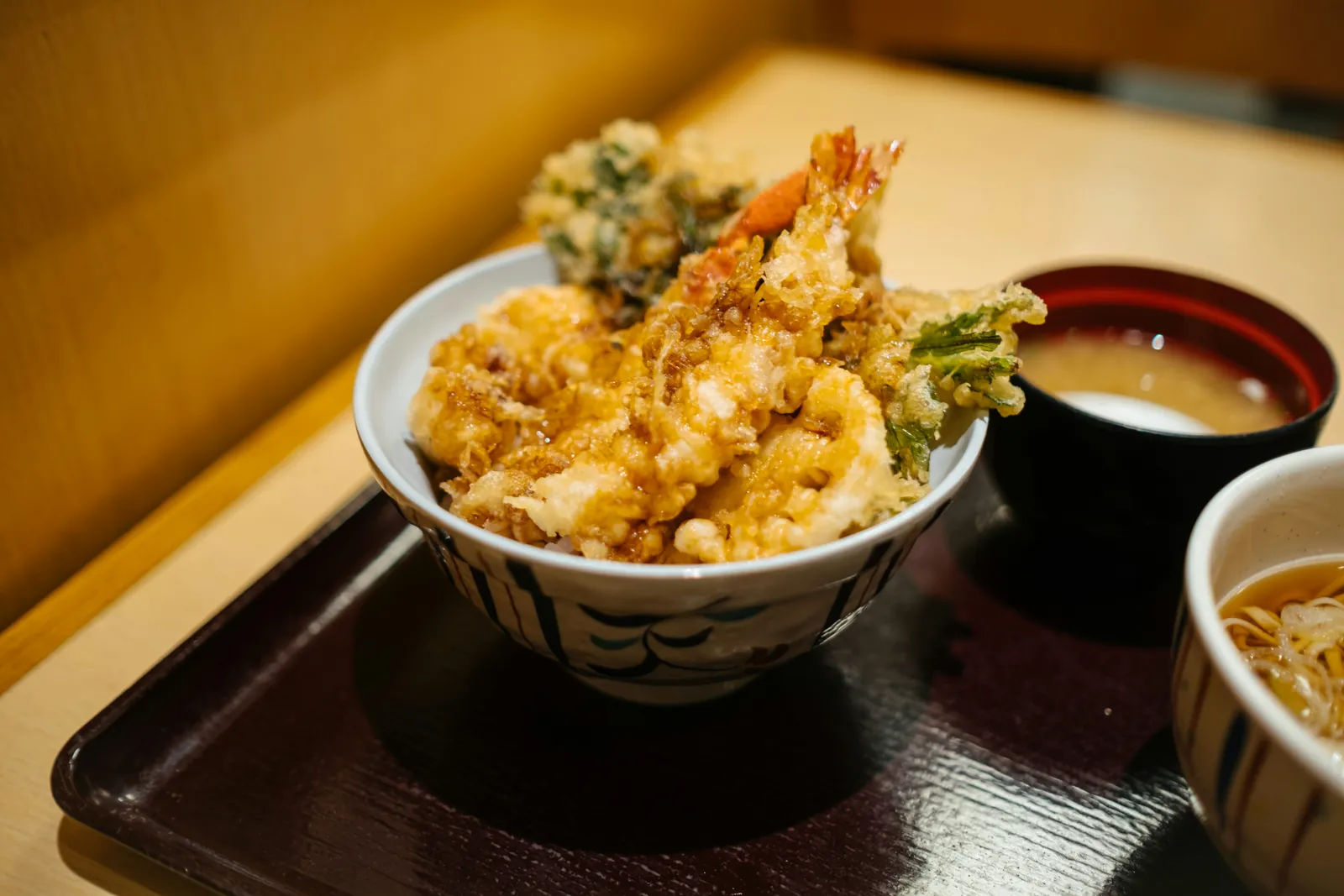
- Tempura. Vegetables and seafood coated in a light batter and fried until crisp. It is served alone, over rice (tendon) or alongside noodles.
- Tonkatsu and katsudon. Tonkatsu is a breaded and fried pork cutlet; when served over a bowl of rice with egg and onion, it is called katsudon. Hearty and very popular.
- Yakitori. Charcoal-grilled chicken skewers (and other parts), the classic accompaniment to a beer at an izakaya.
- Gyoza. Filled dumplings, usually of pork and vegetables, browned on one side. They go very well with a bowl of ramen.
- Okonomiyaki. A kind of savoury griddle pancake with cabbage, batter and the ingredients you choose (its name means "grilled how you like"). It has very distinct regional schools.
- Takoyaki. Batter balls filled with octopus, made on a dimpled griddle and topped with sauce and bonito flakes. Street food par excellence.
- Sukiyaki and shabu-shabu. Two ways of cooking at the table: sukiyaki stews the meat and vegetables in a sweet soy sauce; shabu-shabu blanches them in a broth. Designed to be shared.
- Donburi. A bowl of rice topped with something: beef (gyudon), tempura (tendon), raw fish (kaisendon) or breaded pork (katsudon). Fast, complete and cheap.
- Japanese curry. Milder and thicker than the Indian kind, with a sweet touch. It is served over rice and is one of the most beloved home dishes in the country.
- Kaiseki. Traditional haute cuisine: a tasting menu of many small, seasonal, beautifully presented courses. The most refined dining experience in Japan.
Wagyu and Japanese meats
Wagyu (literally "Japanese cow") is the most famous beef in the country, celebrated for its intense fat marbling that melts in the mouth. The quality is classified on a scale up to the maximum grade A5. The three most prestigious brands, all from the Kansai region, are Kobe beef (from Tajima cattle in Hyogo prefecture), Matsusaka (Mie prefecture) and Omi (Shiga). Authentic Kobe beef is subject to such strict certification that it represents a tiny fraction of all wagyu production.
You do not need to spend a fortune to try it: besides high-end teppanyaki, you can enjoy it at a yakiniku (table barbecue where you grill the meat yourself) or, more cheaply, in a bowl of beef gyudon or a wagyu skewer at a market. In Kobe there are specialised restaurants where the local beef is the star.
Vegetarians, vegans, halal and allergies
Eating in Japan with dietary restrictions is possible, but requires some planning. It is worth knowing what you are up against before travelling.
Vegetarians and vegans. The big challenge is not the visible meat, but the dashi: the base broth of a great many Japanese dishes is made with bonito flakes (dried fish), so it appears in unexpected places, such as miso soup, stewed vegetables or even tofu preparations. The best option is shojin ryori, Buddhist temple cuisine, 100% plant-based and especially present in Kyoto and Koyasan; that said, check that the place uses kombu seaweed dashi and not fish. In the big cities there are more and more dedicated vegan restaurants, but outside them it is worth carrying your restrictions written in Japanese.
Halal. The halal offering in Japan has grown a lot with tourism: in Tokyo, Osaka and Kyoto there are certified or "muslim-friendly" restaurants serving ramen, sushi and even halal wagyu, and the major airports and many shopping centres now have prayer rooms. Even so, it is still a minority, so it is worth locating the places in advance.
Allergies. Flagging an allergy at a restaurant where they do not speak English can be tricky. Carry your allergies translated into Japanese (on a card or your phone) and be careful with soy, wheat, egg, shellfish and nuts, present in many sauces and batters. The guides to Japanese phrases and customs in Japan help you communicate respectfully at the table.
Specialities by city: what to eat at each destination
One of the most fun things about travelling through Japan is that almost every city has its signature dish. Trying the local speciality in its place of origin is a plan in itself, and often the best version of that dish you will eat. These are some of the best-known associations:
| City | Speciality |
|---|---|
| Osaka | Street food capital: takoyaki (octopus balls) and Kansai-style okonomiyaki (everything mixed into the batter) |
| Hiroshima | Hiroshima-style okonomiyaki: layered and with yakisoba noodles inside |
| Fukuoka | Hakata tonkotsu ramen: creamy pork-bone broth, originally from Kyushu |
| Kyoto | Refined kaiseki cuisine, tofu (yudofu, boiled tofu) and seasonal vegetables |
| Tokyo | Top-quality sushi, edomae-style sushi and an inexhaustible food scene |
Okonomiyaki is the best example of how a dish changes from one city to another: in Osaka all the ingredients are mixed into the batter before cooking, while in Hiroshima they are built up in layers and a good portion of yakisoba noodles is added, creating a much taller dish with more textures.
Osaka has a reputation as the "nation's kitchen" and the capital of kuidaore (literally, "eating until you go broke"): it is the dream destination for street food. Fukuoka, in the south, is the birthplace of tonkotsu ramen and famous for its yatai, the street stalls that set up as the afternoon draws in. And Kyoto, at the other extreme, represents elegance: the home of kaiseki and of a temple and tofu vegetarian cuisine recognised throughout the country.
Where to eat: types of restaurant in Japan
In Japan restaurants tend to specialise in a single dish, and each type of place has its own atmosphere and price: konbini, ramen-ya, izakaya, sushi-ya and kaiten-zushi, depachika, shokudo and gyudon or curry chains. And you do not need Japanese to order: there are ticket machines, picture menus and replicas of the dishes in the window. What to expect from each place and how to order and pay, in the restaurants in Japan guide.
How much it costs to eat in Japan
Eating in Japan is more affordable than many people imagine, and the best part is that there is quality at every price range. These are the indicative prices per person and meal, at an approximate rate of 1 € ≈ 177 ¥ (the euro amounts vary with the exchange rate):
| Option | Approx. price | Where |
|---|---|---|
| Konbini (onigiri, bento, hot dish) | 3 - 5 € | 7-Eleven, FamilyMart, Lawson |
| Gyudon or curry chain | 3 - 6 € | Yoshinoya, Sukiya, Matsuya, CoCo Ichibanya |
| Ramen, udon or soba | 6 - 12 € | Ramen-ya, noodle places |
| Set menu (teishoku) | 8 - 12 € | Shokudo, teishoku-ya |
| Mid-range restaurant or izakaya (with a drink) | 15 - 25 € | Izakaya, neighbourhood restaurants |
| Mid-to-high-range counter sushi | 30 - 80 € | Sushi-ya |
| Kaiseki menu | 50 - 100+ € | Traditional restaurants, ryokan |
In practice, alternating konbini and chains for some meals and saving the budget for a couple of special experiences, you can eat wonderfully without blowing the spend. To fit food into the total trip budget, see how much it costs to travel to Japan; and to stretch every yen, the guide on how to save money in Japan.
Markets and food tours
If you want to concentrate a lot of good food in one place, food markets are the best bet. They are lively places where locals and travellers try specialities stall by stall:
- Nishiki Market (Kyoto). Known as "Kyoto's kitchen", it is a covered shopping street about 390 metres long (five blocks) with more than four hundred years of history and well over a hundred stalls: pickles, traditional sweets, tofu, seafood and snacks to eat standing up.
- Kuromon Market (Osaka). "Osaka's kitchen": nearly two centuries of history and about 150 stalls famous for their very fresh seafood and street food, from grilled scallop skewers to freshly made takoyaki.
A great way to discover these markets without missing the best of them is to take a guided food tour: a local takes you stall by stall, explains what each thing is, how it is eaten and where the best stops are. It is especially useful at the start of the trip, when you do not yet know the names or what to order, and it solves the language barrier with a menu only in Japanese at a stroke.
Beyond the markets, there are night izakaya tours, ramen routes and cooking experiences (classes to make sushi or ramen) in the big cities. They are a way to eat and, at the same time, understand what you are eating.
Recommended experience · Klook
Tokyo: Shinjuku food tour (13 dishes and 4 local eateries)
A local guide takes you from bar to bar around the Shinjuku district trying typical dishes. Rated 4.9 out of 5 with more than 2,000 bookings.
View the tour on KlookAffiliate link: if you book through it you pay nothing extra and you help keep this site running.
Japanese sweets and matcha
Traditional Japanese confectionery, wagashi, is a world apart: delicate sweets, lightly sugared and very seasonal, designed to accompany tea. The best known are mochi (glutinous rice cake), dorayaki (two sponge cakes filled with sweet red bean paste) and dango (rice balls on a skewer).
Matcha — powdered green tea — is the star flavour of many modern desserts: ice creams, cakes, lattes and kit-kats. Kyoto, and specifically the Uji area, is the matcha region par excellence, so it is the best place to try it in its most authentic version, whether at a tea ceremony or in an ice cream while you stroll.


