

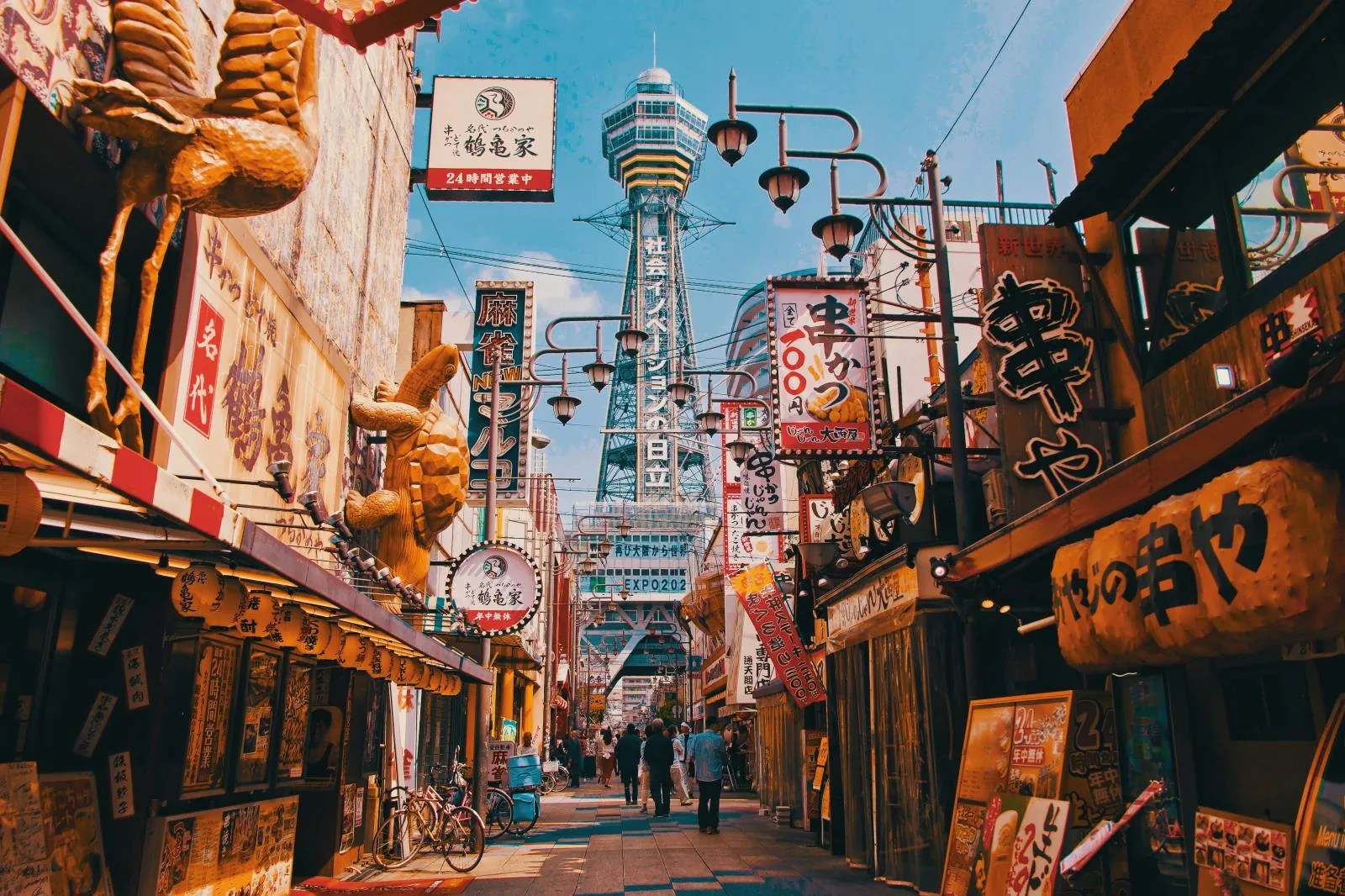
Japan does not have to be expensive. Travelling cheap in Japan is a matter of making a few key decisions well on food, accommodation and transport: with them you can cut your daily spend by 20–40% and plan a low-cost trip without sacrificing the experience.
Quick summary: where the real savings are
Before going into detail, this table summarises the categories where you can save the most money, how much, and the effort each decision requires.
| Category | Tourist spend | Smart spend | Possible saving | Difficulty |
|---|---|---|---|---|
| Food (3 meals/day) | 50–70 €/day | 20–30 €/day | ~30 € / day | Low |
| Connectivity (2 weeks) | 80–112 € (pocket WiFi) | 15–25 € (eSIM) | ~70 € | Low |
| Travel season | Flights + hotel at peak | January–Feb or June | 20–30% | Low (with flexibility) |
| Accommodation (location) | Prime centre: +50 €/night | Well-connected neighbourhood | 300–500 € over 10 days | Medium |
| Transport between cities | JR Pass "just in case" | Calculate: IC, regional pass or JR Pass | Variable | Medium |
| Tickets and activities | Guided tours | Free places | 10–20 €/day | Low |
| Bank fees | Usual home bank + ATM | Revolut or Wise | 10–30 € over 2 weeks | Low |
Food: the biggest saving of the trip
Food is where you can vary your spending the most in Japan. The difference between eating like a tourist and eating like a local traveller can be 30 € per person a day.
| Meal | Approx. price | Where to find it |
|---|---|---|
| Konbini breakfast (onigiri + coffee) | 3–4 € | 7-Eleven, FamilyMart, Lawson |
| Midday bento | 5–7 € | Konbini, supermarket |
| Teishoku set menu | 8–12 € | Local restaurants, izakayas |
| Ramen or udon at a restaurant | 8–14 € | Chains (Ichiran, Yoshinoya) and local spots |
| Eki-ben (station bento) | 7–12 € | Major stations and the Shinkansen |
| Tourist restaurant aimed at foreigners | 25–40 € | Prime tourist areas |
If you travel by Shinkansen, do not skip the eki-ben: bento boxes prepared by local producers and sold at the stations. Eating on the train thus becomes a culinary experience for the price of a sandwich at the airport.
Japanese fast-food chains are another huge lever: Yoshinoya (gyudon from 3 €), Matsuya and Sukiya offer complete dishes with rice and miso soup for under 5 €. For dinner, a neighbourhood izakaya — not the ones in Shibuya with photo menus and English cards — gives you an authentic experience for 12–18 € including a drink.
A classic trick of budget travellers: stop by the bento section of a supermarket or department store one or two hours before closing. The fresh items that will not be sold the next day are marked down with discount stickers (often 30–50%), so you have a quality bento for dinner at half price. To know what to order and where, see the guide on what to eat in Japan.
Transport: the JR Pass only if your route recoups it
The first mistake many people make is buying the JR Pass "by default", as if it always saved money. That is no longer the case. After the October 2023 increase, the nationwide pass costs 50,000 ¥ (~280 €) for 7 days and 80,000 ¥ (~450 €) for 14 days (price set in yen; the euro depends on the day's rate, calculated here at about 177 ¥/€). At those prices, the classic Tokyo–Kyoto–Osaka route no longer recoups it: for it to truly pay off you need to stretch the route to Hiroshima and, better still, Fukuoka or the north.
| Route | Individual tickets | JR Pass 7 days (50,000 ¥) | What is best? |
|---|---|---|---|
| Tokyo → Kyoto → Tokyo (round trip) | ~28,000 ¥ | 50,000 ¥ | Individual tickets |
| Tokyo → Kyoto → Osaka → Tokyo | ~29,000 ¥ | 50,000 ¥ | Individual tickets |
| Tokyo → Kyoto → Hiroshima → Tokyo | ~48,000 ¥ | 50,000 ¥ | Near tie |
| Tokyo → Kyoto → Hiroshima → Osaka → Tokyo | ~52,000 ¥ | 50,000 ¥ | Tight tie |
| Tokyo → Kyoto → Osaka → Fukuoka → Tokyo | ~65,000 ¥ | 50,000 ¥ | JR Pass (yes, it pays off) |
| Kansai only (Osaka, Kyoto, Nara) | <6,000 ¥ (IC) | 50,000 ¥ | Regional pass or IC |
Indicative figures for reserved seats in ordinary class (Hikari/Kodama), rounded; they vary by season. Before buying, add up the tickets for your exact route with the JR Pass calculator. And note: from 1 October 2026 the pass rises again (to 53,000 / 84,000 / 105,000 ¥), but that increase only affects agencies abroad; the official website currently keeps the previous price.
Cheaper alternatives to the JR Pass
- JR regional passes (JR East, JR West, JR Kyushu…): if your trip is concentrated in one area, they are almost always cheaper than the nationwide pass.
- IC card (Suica or Pasmo): for the metro, urban buses and short trips, paying per ticket with the IC usually beats the pass. Load the card at any station machine; it also works at konbini and vending machines. More details in the Suica and Pasmo guide.
- Long-distance night buses (operators such as Willer Express): a Tokyo–Osaka overnight bus costs a fraction of the Shinkansen and, in passing, saves you a hotel night. Slower and less comfortable, but unbeatable on price.
Within the cities, always use the metro or urban trains: a trip costs 1–3 €, while a taxi starts at a minimum of 5–6 € just to set off. For everything else, review the guide to transport in Japan.
Accommodation: location is worth more than facilities
In Japan, location within the city affects both the price and the experience. Neighbourhoods well connected to the metro but away from the tourist epicentre can cost 30–50% less than the centre.
| City | Expensive area | Equivalent budget area | Difference |
|---|---|---|---|
| Tokyo | Shinjuku, Shibuya (80–130 €/night) | Asakusa, Ueno, Akihabara (50–80 €) | ~30–50 €/night |
| Kyoto | Gion, Higashiyama (120–200 €) | Fushimi, Kyoto Station (60–90 €) | ~50–80 €/night |
| Osaka | Prime Shinsaibashi (90–140 €) | South Namba, Tennoji (50–75 €) | ~30–50 €/night |
On a 10-day trip, choosing your neighbourhoods well can save you 300–500 €. Prioritise the neighbourhood over the facilities: a basic, well-connected room beats a poorly located suite in value.
Japanese business hotels (chains such as Toyoko Inn, APA, Dormy Inn) offer small but impeccable rooms for 40–70 € per person. They usually include a Japanese breakfast, good-quality communal baths and are always near metro or train stations.
Season: the most valuable decision of all
Choosing the month well can be worth more money than all the other tricks put together. The months of highest demand (the sakura spring and the koyo autumn) push the price of flights to Japan and hotels up 20–40% compared with the low months.
| Month | Demand | Return flights | Hotels |
|---|---|---|---|
| January | Low | 700–900 € | Year's minimum |
| February | Low | 750–950 € | Year's minimum |
| March–April (sakura) | Very high | 1,100–1,500 € | +30–50% above average |
| May | High (Golden Week) | 1,000–1,300 € | High |
| June (tsuyu) | Low | 750–950 € | Medium-low |
| July–August | High | 900–1,200 € | Medium-high |
| September–October | Medium | 850–1,100 € | Medium |
| November (koyo) | Very high | 1,100–1,400 € | +25–40% above average |
| December | Medium-low | 900–1,200 € | Medium (Christmas high) |
February has its own advantages: snow festivals in Hokkaido, fewer queues at Kyoto's temples and accommodation prices at their lowest. June is humid but has the best price-to-calm ratio of the year. To compare month by month in detail, see the guide on when to travel to Japan.
Connectivity: eSIM vs pocket WiFi
This is the decision where most people overspend without needing to. The comparison is clear:
| Option | Cost (15 days) | Data | Pros | Cons |
|---|---|---|---|---|
| eSIM (Airalo, Holafly, Maya) | 15–25 € | 10–20 GB | No return, lightweight, instant | Needs a compatible phone |
| Pocket WiFi (airport) | 80–112 € | Unlimited (throttled) | Connects several devices | Must be returned, extra item to carry |
| Physical Japanese SIM | 20–35 € | 10–30 GB | Low price | Data only (no voice) |
| Home carrier roaming | 50–200 € | Variable | No setup | Very expensive, opaque rates |
Any iPhone from the 12 and most modern Android phones support eSIM. Recommended providers for Japan: Airalo (10 GB/15 days for ~12–15 €), Holafly (unlimited data for ~25 € on offer) and Maya (good coverage in rural areas). Set up the eSIM before you leave home so you do not lose time at the airport.
What is free in Japan
One of Japan's great surprises is how many memorable experiences cost nothing. Many of the country's most iconic places to see in Japan have free entry or charge 200–500 ¥ (1–3 €).
Free urban spaces
The Shibuya crossing — the busiest in the world — can be seen for free from the street. The Shinjuku district, with its neon alleys and Kabukicho, is free to access. In Kyoto, the Gion district and the Higashiyama path are pedestrian and free of charge. Dotonbori in Osaka, the same. The covered Nishiki market in Kyoto and the outer Tsukiji in Tokyo are also free.
Notable temples and shrines for free
The Fushimi Inari shrine (the tunnels of orange torii) is open 24 hours and completely free. The Meiji shrine in Tokyo, too. The Asakusa shrine (Senso-ji), the most visited in Tokyo, charges no entry to the main grounds. Osaka Castle has free outer gardens, although the interior charges ~5 €.
Nature and parks
Yoyogi Park in Tokyo, Maruyama Park in Kyoto and the Deer Park in Nara are free. In sakura season these parks become the most beautiful settings in the country. Walking through the Sagano bamboo grove (Arashiyama, Kyoto) also costs nothing — the main tunnel is public, though there are paid private areas around it.
Two small savings that add up
The tap water is drinkable across Japan. Carry a reusable bottle and refill it at the hotel, restaurants or public fountains; you save several euros a day on bottled water. And for stray days without accommodation (arrival or departure), use the coin lockers at stations: leaving your luggage costs about 300–700 ¥ (2–4 €), far less than paying for an extra hotel night or carrying your luggage all day.
How to handle cash without scares
Japan is still a country with a strong cash culture. The smart strategy is to always carry some and to know where to get more when it runs out.
How much cash to carry per day?
For a typical day of sightseeing budget 5,000–10,000 ¥ (28–56 €) in cash. It is enough to eat at two or three places, pay for tickets and catch the odd local bus. In very touristy cities card acceptance is wide, but in rural areas cash is still essential.
The best ATMs for international cards
The most reliable ATMs are those at 7-Eleven (Seven Bank ATM) and at Japan Post offices. They accept Visa, Mastercard, Maestro and other international networks, with an English interface. Local bank ATMs (MUFG, Mizuho) often reject foreign cards or charge high fees.
Minimising bank fees
Each withdrawal at a foreign ATM can cost 2–5 € with a usual home bank. To minimise it, withdraw large amounts at once (50,000–100,000 ¥) instead of small amounts several times. The smartest option: open a Revolut or Wise account before you leave. Both operate with no fees abroad and at the real interbank exchange rate.
The Suica: your best ally
The Suica card (or Pasmo, which works the same) is rechargeable and works for the metro, konbini, vending machines and many shops. You can add it directly to Apple Pay or Google Wallet if your phone supports it, which completely removes the need to have the physical card.
Mistakes that quietly inflate your spending
Sometimes it is not about saving more, but about no longer throwing money away on avoidable decisions. These are the most common mistakes of first-time visitors to Japan.
- Exchanging your home currency to yen at the departure airport: exchange bureaus at home and at airports apply very poor rates. It is better to withdraw yen directly from a 7-Eleven or Japan Post ATM on arrival, or to pay with Revolut/Wise.
- Buying the JR Pass "just in case": after the 2023 increase (50,000 ¥ for the 7-day pass), the classic Tokyo–Kyoto–Osaka route no longer recoups it. If you do not chain several long Shinkansen journeys, paying per ticket is cheaper. Always calculate your case in the JR Pass calculator before buying.
- Taking taxis after missing the last train: the metro and trains close around 00:00–01:00. A night taxi across Tokyo can cost 30–50 €. Check the last-train time if you are out at night.
- Eating at restaurants with multilingual menus and photos at the door: in tourist areas they are usually more expensive and worse. Walk a street or two towards where Japanese people eat.
- Not claiming tax-free on large purchases: as a tourist you can save the 10% tax at shops with a "Tax-Free" sign from a minimum of 5,000 ¥ per shop and day, by showing your passport. Until 31 October 2026 the discount is applied in the shop; from 1 November 2026 it changes to "pay first and claim the refund at the airport", so keep all your receipts. We explain it in detail in the money in Japan guide.
- Paying for your home carrier's roaming: it is the most expensive way to have data. An eSIM costs a fraction.
- Buying bottled water all day: the tap water is drinkable. Carry a reusable bottle and refill it.