

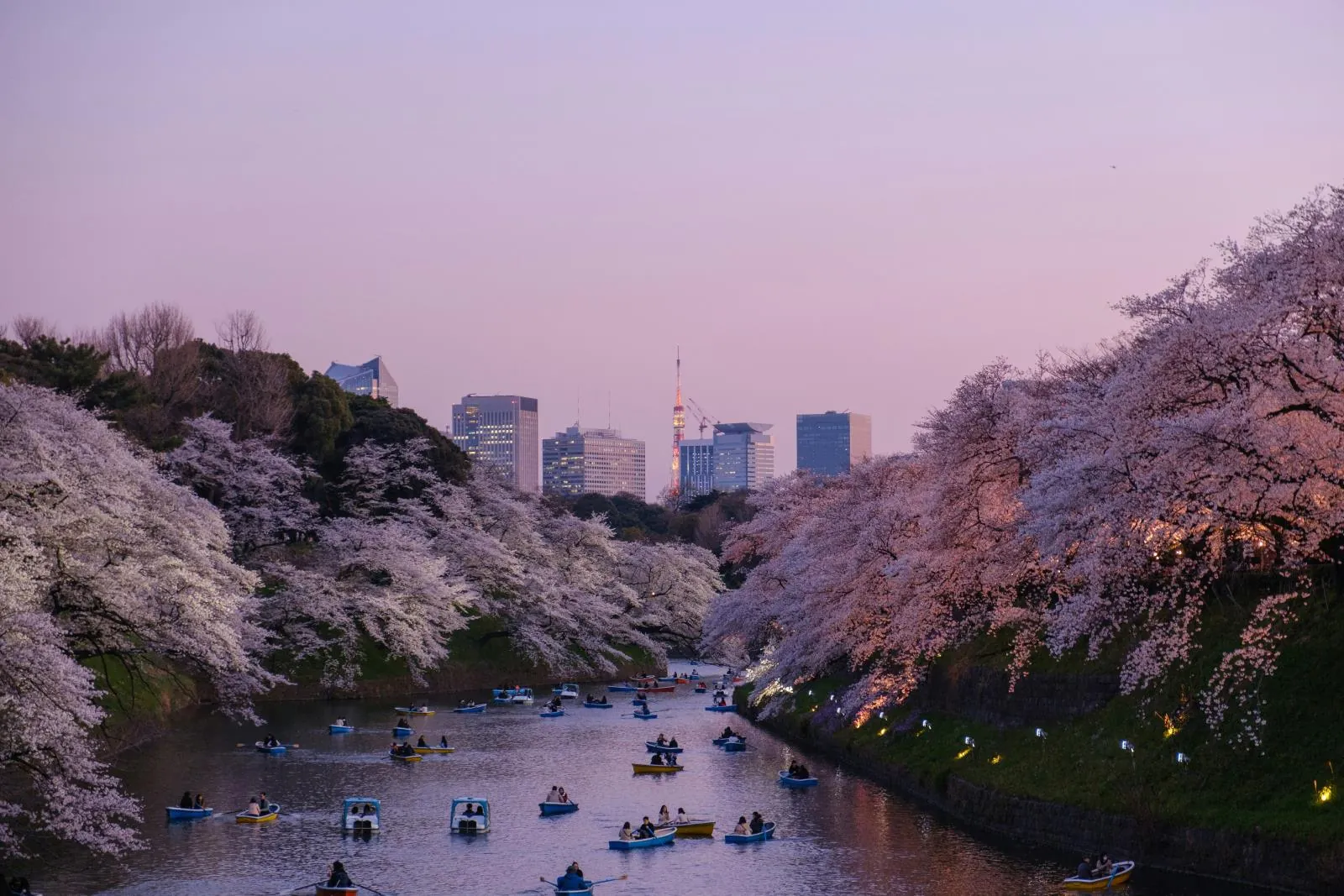
Japan broke its tourism record in 2024 with almost 37 million foreign visitors, and Tokyo is the gateway for most of them. The tourist infrastructure is adapted for those who do not speak Japanese: you can spend a week without saying a single word in Japanese and have no serious problem. But "no serious problems" and "no limitations" are not the same thing.
Where English works well
On the main tourist circuits, English reaches without a problem:
- Metro and trains: all stations have names and panels in English. Metro maps are available in English for free at information offices. Google Maps works perfectly for navigating the network.
- Airports: Narita and Haneda have full signage in English, Japanese, Chinese and Korean. The immigration and customs staff speak basic English, which is a relief right after stepping off a long-haul flight.
- Hotels: at any hotel above 2 stars in tourist areas, the staff speak English. Business hotels have a reception with functional English.
- Tourist attractions: the main museums (Tokyo National Museum, teamLab, Mori Art Museum) have audio guides and panels in English.
- Restaurant chains and konbini: the konbini (7-Eleven, FamilyMart, Lawson) have touchscreens with universal icons. Chains such as Yoshinoya or Sukiya have photo menus.
Where basic Japanese makes the difference
Off the most frequented tourist circuits, English becomes scarcer:
- Small traditional restaurants: many neighbourhood izakayas, local ramen places or midday teishoku have a menu only in Japanese, with no photos. This is where Google Translate with the camera is essential.
- Taxi drivers: they speak little or no English. Showing the destination on screen (Google Maps) is the standard solution.
- Neighbourhood shops: in non-tourist shops in Yanaka, Shimokitazawa or second-hand markets, the assistant probably does not speak English. With gestures and a calculator you get by.
- Clinics and pharmacies: if you need medication or medical care, English may fail. The pharmacy chains (Matsumoto Kiyoshi, Sundrug) have staff who sometimes speak basic English and translation tablets at the counter. For these situations it helps to arrive with travel insurance that includes phone assistance in your language.
The apps that solve 90% of the problems
You do not need to learn Japanese if you carry these tools on your phone. That said, almost all of them work better with a connection: bring an eSIM or pocket wifi to have data whenever you need them.
Google Translate with camera mode
The real-time translation with the camera is the most useful function. You point the phone at a menu, a sign or a form in Japanese and the app overlays the translation on your screen. It is not perfect, but it identifies dishes, prices and instructions with enough accuracy. Download the offline Japanese language pack before leaving to use it without data.
DeepL
For longer or more precise translations (emails, hotel forms, complex signs), DeepL beats Google Translate for Japanese-English. Useful for understanding the house rules of an onsen, accommodation rules or any more elaborate text.
VoiceTra
A free app developed by the Japanese institute NICT, designed specifically for travel conversations (transport, restaurants, hotels, shopping). It translates voice in both directions and shows a "back-translation" so you can check the message was understood well before showing it to your interlocutor. It works very well with short phrases from English to Japanese.
Google Maps
Not just for navigation: the app shows the names of restaurants and businesses with reviews in English. You can find "ramen near here" and see photos of the menu before going in. It is also the standard way to show a taxi driver your destination without speaking Japanese.
The basic Japanese worth learning
There is no need to memorise the alphabet. These phrases cover most everyday situations and the effort of learning them shows in the welcome you receive. Japanese people really appreciate the attempt.
| Japanese (romaji) | Meaning | When to use it |
|---|---|---|
| Sumimasen | Excuse me / sorry | To get the waiter's attention or ask to pass |
| Arigatou gozaimasu | Thank you very much (formal) | Whenever you receive something, on leaving a shop |
| Hai / Iie | Yes / No | Quick answers |
| Ikura desu ka? | How much is it? | In shops with no visible price |
| Kore wo kudasai | This one, please | Pointing at something on the menu or in the window |
| Eigo wa hanasemasu ka? | Do you speak English? | Before attempting a long conversation |
| Toire wa doko desu ka? | Where is the toilet? | Anywhere public |
| Wakarimasen | I do not understand | When you do not understand something |
| [Place] ni ikitai desu | I want to go to [place] | To the taxi driver, pointing to the name on the map |
| Oishii! | It is delicious! | After eating at any local restaurant |
Saying arigatou instead of "thank you" changes the energy of the interaction. And saying oishii when you finish eating at a small restaurant usually generates a genuine smile from the cook. Beyond the language, knowing some Japanese customs (no tipping, taking off your shoes, queuing) will help you as much as the words.
Signs and kanji worth recognising
You do not need to read Japanese, but recognising a dozen characters at a glance saves you doubts at stations, toilets, doors and shops. These are the most useful for everyday life:
| Kanji | Meaning | Where you see it |
|---|---|---|
| 入口 | Entrance | Stations, buildings, shops |
| 出口 | Exit | Stations, department stores |
| 男 / 女 | Man / Woman | Toilets and onsen (blue / red curtains) |
| 営業中 | Open | Doors of restaurants and shops |
| 準備中 | Closed (preparing) | Restaurants between services |
| 禁煙 / 喫煙 | No smoking / Smoking area | Restaurants, cafes, streets |
| 無料 / 有料 | Free / Paid | Lockers, attractions, toilets |
| 円 | Yen (¥) | Prices on menus and labels |
| 押す / 引く | Push / Pull | Doors |
A practical trick: in public baths and onsen, the blue curtain or sign usually indicates men (男) and red women (女). And to convert any price you see with the kanji 円 to euros on the go, you will find the yen converter useful.